
EVALUATING POTABILITY OF GROUNDWATER USING AI-DRIVEN APPROACHES

Article Sidebar
-
Nutrition, Vitamin D, Calcium, Cow milk, Breast milk
Abstract
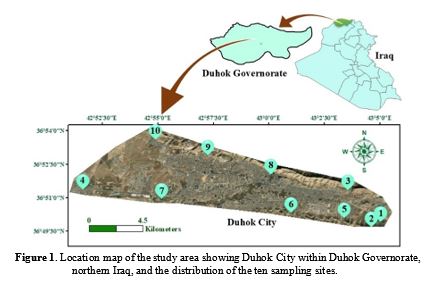
Integrating artificial intelligence (AI) techniques into groundwater quality assessments is a pivotal step toward achieving water resource sustainability and ensuring its safety for human consumption. This is achieved by leveraging the advanced analytical capabilities of these technologies. Parameters such as pH, total dissolved solids (TDS), total alkalinity (T.A), chloride, sulfate (SO4), phosphorus oxide (PO4), Temperature (T) , electrical conductivity(EC), turbidity (Tur), bicarbonate (HCO3), total hardness (T.H), calcium hardness (Ca.H), magnesium hardness (Mg.H), sodium (Na), potassium (K) , and dissolved oxygen were analyzed to assess groundwater quality in Duhok City, Iraq. Water Quality Index (WQI) and Adaptive Neuro-Fuzzy Inference System for Drinking (ANFIS-D) were employed in classifying water quality as excellent, good, poor, very poor, and unsuitable. It is beneficial to infer water quality for the individuals and decision-makers in the region. The WQI and ANFIS-D of the research area are between (37-50) (33-49), respectively. The overall WQI of the research area finds that the groundwater is safe and potable. The statistical metrics such as root mean square error (RMSE), mean bias error (MBE), and correlation coefficient (R) are used to check the validity of the ANFIS-D model. Studies show that the R value, MBE, and RMSE of the ANFIS-D model are (0.851, 2.9 and 3.81) respectively. Based on the results of these Statistical parameters, the ANFIS-D estimation model can predict the groundwater quality index of Duhok City with reasonable accuracy, which is useful and valuable for estimating the groundwater quality index.
Full text article
References
Adams, V. D. (2017). Water and wastewater examination manual. Routledge.
Al-Adhaileh, M. H., Aldhyani, T. H., Alsaade, F. W., Al-Yaari, M., & Albaggar, A. K. A. (2022). Groundwater quality: the application of artificial intelligence. Journal of Environmental and Public Health, 2022(1), 8425798. https://doi.org/https://doi.org/10.1016/j.jenvman.2024.120495
Al-Barwary, M. R. (2021). Assessment of well water quality for drinking purposes within Selevania District, Zakho City, Kurdistan Region/Iraq. Science Journal of University of Zakho, 9(3), 144–148. https://doi.org/https://doi.org/10.25271/sjuoz.2023.11.2.939
Al-Mashhadany, M. (2021). Application of the CCME water quality index to evaluate the groundwater quality of shouira village for drinking and domestic purposes in Nineveh governorate IOP Publishing. doi, 10(17551315), 722. https://doi.org/htpp:// doi:10.1088/1755-1315/722/1/012029
Al-Mashhadany, M. H. S. (2021a). Assessment the suitable of the groundwater for civil uses in Kakhirta Village, Al-Ayadiyah Subdistrict, Iraq. Journal of Physics: Conference Series,
Al-Mashhadany, M. H. S. (2021b). Evaluation of the wells water quality for irrigation in Ein Al-Husaan village, Talafar district, Iraq. Materials Today: Proceedings, 42, 2756–2761. https://doi.org/https://doi.org/10.1016/j.matpr.2020.12.717
Al-Mashhadany, M. H. S. (2022). Valuation of groundwater contaminated with nitrates and human health risks (HHR) between villages of Sinjar and Tal Afar districts, Iraq. Pakistan Journal of Analytical & Environmental Chemistry, 23(2), 277. https://doi.org/http://doi.org/10.21743/pjaec/2022.12.10
Ali, S., Verma, S., Agarwal, M. B., Islam, R., Mehrotra, M., Deolia, R. K., Kumar, J., Singh, S., Mohammadi, A. A., & Raj, D. (2024). Groundwater quality assessment using water quality index and principal component analysis in the Achnera block, Agra district, Uttar Pradesh, Northern India. Scientific Reports, 14(1), 5381. https://doi.org/https://doi.org/10.1038/s41598-024-56056-8
Alshahri, M., & Al-Mashhadany, M. (2025). Evaluation of Surface Water Quality for Aquatic Life Using Artificial Intelligence Method. Egyptian Journal of Aquatic Biology and Fisheries, 29(1), 2879–2892. https://doi.org/http://www.ejabf.journals.ekb.eg/
Brown, R. M., McClelland, N. I., Deininger, R. A., & O’Connor, M. F. (1972). A water quality index—crashing the psychological barrier. Indicators of Environmental Quality: Proceedings of a symposium held during the AAAS meeting in Philadelphia, Pennsylvania, December 26–31, 1971,
Cobaner, M., Yurtal, R., Dogan, A., & Motz, L. H. (2012). Three dimensional simulation of seawater intrusion in coastal aquifers: A case study in the Goksu Deltaic Plain. Journal of hydrology, 464, 262–280. https://doi.org/https://doi.org/10.1016/j.jhydrol.2012.07.022
Dehghan Rahimabadi, P., Behnia, M., Nasabpour Molaei, S., Khosravi, H., & Azarnivand, H. (2024). Assessment of groundwater resources potential using Improved Water Quality Index (ImpWQI) and entropy-weighted TOPSIS model. Sustainable Water Resources Management, 10(1), 7. https://doi.org/https://doi.org/10.1007/s40899-023-00988-y
El-Rawy, M., Batelaan, O., Alshehri, F., Almadani, S., Ahmed, M. S., & Elbeltagi, A. (2023). An Integrated GIS and machine-learning technique for groundwater quality assessment and prediction in southern Saudi Arabia. Water, 15(13), 2448. https://doi.org/https://doi.org/10.3390/w15132448
Gautam, V. K., Kothari, M., Al-Ramadan, B., Singh, P. K., Upadhyay, H., Pande, C. B., Alshehri, F., & Yaseen, Z. M. (2024). Groundwater quality characterization using an integrated water quality index and multivariate statistical techniques. PLoS one, 19(2), e0294533. https://doi.org/https://doi.org/10.1371/journal.pone.0294533
Gholami, V., Khaleghi, M., Pirasteh, S., & Booij, M. J. (2022). Comparison of self-organizing map, artificial neural network, and co-active neuro-fuzzy inference system methods in simulating groundwater quality: geospatial artificial intelligence. Water Resources Management, 36(2), 451–469. https://doi.org/https://doi.org/10.1007/s11269-021-02969-2
Ibrahim, H., Yaseen, Z. M., Scholz, M., Ali, M., Gad, M., Elsayed, S., Khadr, M., Hussein, H., Ibrahim, H. H., & Eid, M. H. (2023). Evaluation and prediction of groundwater quality for irrigation using an integrated water quality indices, machine learning models and GIS approaches: A representative case study. Water, 15(4), 694. https://doi.org/https://doi.org/10.3390/w15040694
Mohammed H. Sabry Al-Mashhadany , N. M. A. Q., & Al-Saffawi, a. A. Y. T. (2025). Comparison between fuzzy logic and water quality index (CCME) methods: A
case of water quality assessment for livestock watering. Al-Qadisiyah Journal for Engineering Sciences, 18(2), 1–8. https://doi.org/https://doi.org/10.30772/qjes.000.000.000
Mohammed, M. A., Khleel, N. A., Szabó, N. P., & Szűcs, P. (2023). Modeling of groundwater quality index by using artificial intelligence algorithms in northern Khartoum State, Sudan. Modeling Earth Systems and Environment, 9(2), 2501–2516. https://doi.org/https://doi.org/10.1007/s40808-022-01638-6
Najafi Saleh, H., Valipoor, S., Zarei, A., Yousefi, M., Baghal Asghari, F., Mohammadi, A. A., Amiri, F., Ghalehaskar, S., & Mousavi Khaneghah, A. (2020). Assessment of groundwater quality around municipal solid waste landfill by using Water Quality Index for groundwater resources and multivariate statistical technique: a case study of the landfill site, Qaem Shahr City, Iran. Environmental geochemistry and health, 42, 1305–1319. https://doi.org/https://doi.org/10.1007/s10653-019-00417-0
Page, D., Miotliński, K., Toze, S., & Barron, O. (2014). Human health risks of untreated groundwater third pipe supplies for non-potable domestic applications. Urban Water Journal, 11(6), 461–466. https://doi.org/https://doi.org/10.1080/1573062X.2013.831912
Palaniselvan, G., Govindhan, P., Jayganesh, D., Kumar, M. D., & Chandraseelan, R. E. (2024). Water quality assessment: a case study in the Tuticorin district of Tamil Nadu in South India. Urban Water Journal, 21(5), 565–577. https://doi.org/https://doi.org/10.1080/1573062X.2024.2312525
Rice, E. W., Baird, R. B., Eaton, A. D., & Clesceri, L. S. (2012). Standard methods for the examination of water and wastewater.
Singh, S., & Noori, A. R. (2022). Groundwater quality assessment and modeling utilizing water quality index and GIS in Kabul Basin, Afghanistan. Environmental Monitoring and Assessment, 194(10), 673. https://doi.org/https://doi.org/10.1007/s10661-022-10340-0
Trivedi, K., Kapshe, M., Das, V. M., & Bade, S. (2023). Groundwater pricing strategies for Indian cities-a case of Kanpur. Urban Water Journal, 20(4), 498–512. https://doi.org/https://doi.org/10.1080/1573062X.2023.2184701
Uddin, M. G., Rana, M. S. P., Diganta, M. T. M., Bamal, A., Sajib, A. M., Abioui, M., Shaibur, M. R., Ashekuzzaman, S., Nikoo, M. R., & Rahman, A. (2024). Enhancing groundwater quality assessment in coastal area: A hybrid modeling approach. Heliyon, 10(13). https://doi.org/https://doi.org/10.1016/j.heliyon.2024.e33082
Wan Mohtar, W. H. M., Afan, H., El-Shafie, A., Bong, C. H. J., & Ab. Ghani, A. (2018). Influence of bed deposit in the prediction of incipient sediment motion in sewers using artificial neural networks. Urban Water Journal, 15(4), 296–302. https://doi.org/https://doi.org/10.1080/1573062X.2018.1455880
WO, N., Hosny, R., Ghareeb, M., Abd-Elhamid, H. F., Zelenáková, M., & Gad, M. (2025). Assessment of Groundwater Quality and Contamination Hazardous using Water Quality Index and Physicochemical Analysis in Assiut Governorate, Upper Egypt. Water, Air, & Soil Pollution, 236(3), 164. https://doi.org/https://doi.org/10.1007/s11270-025-07789-3
Authors
Copyright (c) 2026 Vanbastin Nawzad Youkhana, Mohammed Hazim Al-Mashhadany, and Najlaa Mohammed Ali Qaseem

This work is licensed under a Creative Commons Attribution-NonCommercial-ShareAlike 4.0 International License.
Authors who publish with this journal agree to the following terms:
- Authors retain copyright and grant the journal right of first publication with the work simultaneously licensed under a Creative Commons Attribution License [CC BY-NC-SA 4.0] that allows others to share the work with an acknowledgment of the work's authorship and initial publication in this journal.
- Authors are able to enter into separate, additional contractual arrangements for the non-exclusive distribution of the journal's published version of the work, with an acknowledgment of its initial publication in this journal.
- Authors are permitted and encouraged to post their work online.