
ENHANCEMENT OF KENAF PLANT (Hibiscus cannabinus L.) TO UPTAKE HEAVY METALS THROUGH SOIL AMENDMENT WITH BIOCHAR AND MULCHING

Article Sidebar
-
Kenaf, Biochar, Mulching, Phytoremediation, Heavy Metals
Abstract
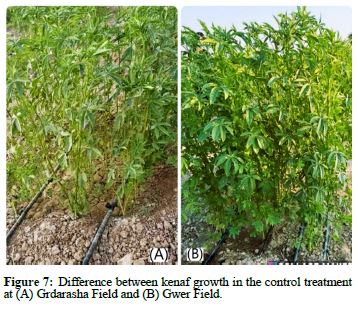
Environmental pollution (soil, water, and air) is a growing global concern with serious public health impacts, motivating the development of effective mitigation strategies. This study evaluated soil amendment and phytoremediation by cultivating kenaf (Hibiscus cannabinus L.) with biochar and wheat straw mulch. Field experiments were conducted at two sites in Erbil Governorate (Grdarasha and Gwer),
where soils may be contaminated by industrial and agricultural activities. The objectives were to assess pollution levels at both locations, determine how to reduce heavy-metal concentrations in soil, and examine whether biochar and mulch enhance kenaf uptake of heavy metals. At Grdarasha, the control treatment showed the highest leaf accumulation of Pb, Cu, Ni, and Cr (0.07, 0.07, 0.09, and 0.05), ppm
respectively, supporting kenaf’s phytoremediation potential. At Gwer, applying 150 g/m2 biochar without mulching produced the highest leaf accumulation of Cu, Ni, Cr, and Fe (0.06, 0.08, 0.03, and 4.50), ppm respectively. Overall, biochar and wheat straw mulch reduced soil heavy metals, likely by chelation and altering metal mobility, while generally improving kenaf’s capacity for heavy-metal uptake.
Full text article
References
Ahmed, B. H. & Hussain, R. O. (2025). Phytoremediation Potential of Catalpa Bignonioides in Crude Oil-Contaminated Soils: Evidence from Duhok, Kurdistan Region. Science Journal of University of Zakho, 13(3), 388-399. https://doi.org/10.25271/sjuoz.2025.13.3.1559
Ainsworth, E. A., & Long, S. P. (2021). 30 years of free‐air carbon dioxide enrichment (FACE): What have we learned about future crop productivity and its potential for adaptation? Global Change Biologyy, 27(1), 27-49. https://doi.org/10.1111/gcb.15375
Akhtar, K., Wang, W., Djalovic, I., Prasad, P. V. V., Ren, G., Ain, N. U., Riaz, M., Feng, Y., Yang, G. & Wen, R. (2023). Combining Straw Mulch with Nitrogen Fertilizer Improves Soil and Plant Physio-Chemical Attributes, Physiology, and Yield of Maize in the Semi-Arid Region of China. Plants, 12(18), 3308. https://doi.org/10.3390/plants12183308
Alengebawy, A., Abdelkhalek, S. T., Qureshi, S. R., & Wang, M.-Q. (2021). Heavy metals and pesticides toxicity in agricultural soil and plants: Ecological risks and human health implications. Toxics, 9(3), 42. https://doi.org/10.3390/toxics9030042
Anwar, M. N., Iftikhar, M., Khush Bakhat, B., Sohail, N. F., Baqar, M., Yasir, A., & Nizami, A. S. (2019). Sources of carbon dioxide and environmental issues. In Inamuddin, A. M. Asiri, & E. Lichtfouse (Eds.), Sustainable Agriculture Reviews (Vol. 37, Carbon sequestration: Vol. 1. Introduction and biochemical methods, pp. 13–36. Cham, Switzerland: Springer. https://link.springer.com/series/8380
Arbaoui, S., Evlard, A., Mhamdi M.E.W., W., Campanella, B., Paul, R. & Bettaieb, T. (2013). Potential of kenaf (Hibiscus cannabinus L.) and corn (Zea mays L.) for phytoremediation of dredging sludge contaminated by trace metals. Biodegradation, 24(4), 563-567. https://doi.org/10.1007/s10532-013-9626-5
Ashraf, S., Ali, Q., Zahir, Z. A., Ashraf, S. & Asghar, H. N. (2019). Phytoremediation: Environmentally sustainable way for reclamation of heavy metal polluted soils. Ecotoxicology and Environmental Safety, 174, 714-727. https://doi.org/10.1016/j.ecoenv.2019.02.068
Baika, L., Dos Santos, E., Herrmann, A. & Grassi, M. (2016). Simultaneous determination of As, Hg, Sb, and Se in mineral fertilizers using ultrasonic extraction and CVG-ICP OES. Analytical Methods, 8(47), 8362-8367. https://doi.org/10.1039/C6AY02687G
Basak, B., Sarkar, B., Saha, A., Sarkar, A., Mandal, S., Biswas, J. K., Wang, H. & Bolan, N. S. (2022). Revamping highly weathered soils in the tropics with biochar application: What we know and what is needed. Science of The Total Environment, 822, 153461. https://doi.org/10.1016/j.scitotenv.2022.153461
Beretta, A. N., Silbermann, A. V., Paladino, L., Torres, D., Bassahun, D., Musselli, R. & García-Lamohte, A. (2014). Soil texture analyses using a hydrometer: modification of the Bouyoucos method. International Journal of Agriculture and Natural Resources, 41(2), 263-271. DOI: 10.4067/S0718-16202014000200013
Bolan, N., Hoang, S. A., Beiyuan, J., Gupta, S., Hou, D., Karakoti, A., Joseph, S., Jung, S., Kim, K.-H. & Kirkham, M. (2022). Multifunctional applications of biochar beyond carbon storage. International Materials Reviews, 67(2), 150-200. https://doi.org/10.1080/09506608.2021.1922047
Chen, D., Liu, X., Bian, R., Cheng, K., Zhang, X., Zheng, J., Joseph, S., Crowley, D., Pan, G. & Li, L. (2018). Effects of biochar on availability and plant uptake of heavy metals–A meta-analysis. Journal of Environmental Management, 222, 76-85. https://doi.org/10.1016/j.jenvman.2018.05.004
Chen, P., Li, Z., Luo, D., Jia, R., Lu, H., Tang, M., Hu, Y., Yue, J. & Huang, Z. (2021). Comparative transcriptomic analysis reveals key genes and pathways in two different cadmium tolerance kenaf (Hibiscus cannabinus L.) cultivars. Chemosphere, 263, 128211. https://doi.org/10.1016/j.chemosphere.2020.128211
Choi, M. Y., Lee, C. G., Yoon, Y. M. & Park, S. J. (2024). Kenaf biochar as an eco‐friendly adsorbent for removal of Cu (II) and Pb (II): optimal temperature, adsorption models, and efficiency evaluation. Applied Organometallic Chemistry, 38(11), e7672. https://doi.org/10.1002/aoc.7672
Corinzia, S. A., Scordia, D., D’Agosta, G., Cosentino, S. L. & Patanè, C. (2022). LAI and biomass of kenaf as affected by sowing time and plant density: A simple model simulates the time course in a Mediterranean environment. Industrial Crops and Products, 184, 114995. https://doi.org/10.1016/j.indcrop.2022.114995
Cui, X., Mao, P., Sun, S., Huang, R., Fan, Y., Li, Y., Li, Y., Zhuang, P. & Li, Z. (2021). Phytoremediation of cadmium contaminated soils by Amaranthus Hypochondriacus L.: The effects of soil properties highlighting cation exchange capacity. Chemosphere, 283, 131067. https://doi.org/10.1016/j.chemosphere.2021.131067
Estefan, G., Sommer, R., & Ryan, J. (2013). Methods of soil, plant, and water analysis: A manual for the West Asia and North Africa region (3rd ed.). Beirut, Lebanon: International Center for Agricultural Research in the Dry Areas (ICARDA). https://hdl.handle.net/20.500.11766/7512
Golia, E. E. (2023). The impact of heavy metal contamination on soil quality and plant nutrition. Sustainable management of moderate contaminated agricultural and urban soils, using low cost materials and promoting circular economy. Sustainable Chemistry and Pharmacy, 33, 101046. https://doi.org/10.1016/j.scp.2023.101046
Ibrahim, E. A., El-Sherbini, M. A. & Selim, E.-M. M. (2022). Effects of biochar on soil properties, heavy metal availability and uptake, and growth of summer squash grown in metal-contaminated soil. Scientia Horticulturae, 301, 111097. https://doi.org/10.1016/j.scienta.2022.111097
Jabro, J. D., Stevens, W. B. & Iversen, W. M. (2020). Comparing two methods for measuring soil bulk density and moisture content. Open Journal of Soil Science, 10(06), 233-243. https://doi.org/10.4236/ojss.2020.106012
Jang, A., Seo, Y. & Bishop, P. L. (2005). The removal of heavy metals in urban runoff by sorption on mulch. Environmental Pollution, 133(1), 117-127. https://doi.org/10.1016/j.envpol.2004.05.020
Korkanç, S. Y. & Şahin, H. (2021). The effects of mulching with organic materials on the soil nutrient and carbon transport by runoff under simulated rainfall conditions. Journal of African Earth Sciences, 176, 104152. https://doi.org/10.1016/j.jafrearsci.2021.104152
Li, Q., Lesseur, C., Srirangam, P., Kaur, K., Hermetz, K., Caudle, W. M., Fiedler, N., Panuwet, P., Prapamontol, T. & Naksen, W. (2023). Associations between prenatal organophosphate pesticide exposure and placental gene networks. Environmental Research, 224, 115490. https://doi.org/10.1016/j.envres.2023.115490
Loeppert, R. H., & Suarez, D. L. (1996). Carbonate and gypsum. In D. L. Sparks (Ed.), Methods of soil analysis: Part 3. Chemical methods (SSSA Book Series No. 5, pp. 437–474). Madison, WI: Soil Science Society of America & American Society of Agronomy. https://doi.org/10.2136/sssabookser5.3.c15Digital Object Identifier (DOI)
Luo, D., Lu, H., Wang, C., Mubeen, S., Cao, S., Yue, J., Pan, J., Wu, X., Wu, Q. & Zhang, H. (2023). Physiological and DNA methylation analysis provides epigenetic insights into kenaf cadmium tolerance heterosis. Plant Science, 331, 111663. https://doi.org/10.1016/j.plantsci.2023.111663
Mahdi Khalatbari, A., Jaafar, H. & Ali Khalatbari, A. (2014). The impact of CO2 enrichment on fiber dimension and lignocellulose properties of three varieties of kenaf (Hibiscus cannabinus L.). Journal of Soil Science and Plant Nutrition, 14(3), 676-687. http://dx.doi.org/10.4067/S0718-95162014005000054
Mani, F. A., Talha, I., & Ismaila, M. (2018). Phytoremediation potential of Kenaf (HibisCus cannabinus L.) in lead (Pb) contaminated sandy loam soil of Maiduguri Nigeria. Journal of Global Ecology and Environment, 8(1), 43-49. https://ikprress.org/index.php/JOGEE/article/view/1262?utm_source=chatgpt.com
Meera, M., & Agamuthu, P. (2012). Phytoextraction of As and Fe using Hibiscus cannabinus L. from soil polluted with landfill leachate. International journal of Phytoremediation, 14(2), 186-199. https://doi.org/10.1080/15226514.2011.587481
Mukherjee, S., Sarkar, D., Mandal, B., Kanthal, S., Ghosh, S., Sahu, B., Singh, P., Dey, A., Jaison, M. & Dutta, J. (2025). Conservation agriculture influences soil nitrogen availability in the lower Indo-Gangetic Plains. Plant and Soil, 508(1), 731-747. https://doi.org/10.1007/s11104-024-06826-0
Münzel, T., Hahad, O., Daiber, A. & Landrigan, P. J. (2023). Soil and water pollution and human health: what should cardiologists worry about? Cardiovascular Research, 119(2), 440-449. https://doi.org/10.1093/cvr/cvac082
Nguyen, T. B., Sherpa, K., Bui, X. T., Nguyen, V. T., Vo, T. D., Ho, H. T., Chen, C. W. & Dong, C. D. (2023). Biochar for soil remediation: A comprehensive review of current research on pollutant removal. Environmental Pollution, 337, 122571. https://doi.org/10.1016/j.envpol.2023.122571
Nunes, L. J. (2023). The rising threat of atmospheric CO2: a review on the causes, impacts, and mitigation strategies. Environments, 10(14), 66. https://doi.org/10.3390/environments10040066
Olsen, S. R., & Sommers, L. E. (1982). Phosphorus soluble in sodium bicarbonate. In A. L. Page, R. H. Miller, & D. R. Keeney (Eds.), Methods of soil analysis, Part 2: Chemical and microbiological properties (2nd ed., Agronomy Monograph No. 9, pp. 403–430). Madison, WI: American Society of Agronomy & Soil Science Society of America. https://doi.org/10.2134/agronmonogr9.2.2ed.c24
Pan, J., Cao, S., Xu, G., Rehman, M., Li, X., Luo, D., Wang, C., Fang, W., Xiao, H., Liao, C. & Chen, P. (2023). Comprehensive analysis reveals the underlying mechanism of arbuscular mycorrhizal fungi in kenaf cadmium stress alleviation. Chemosphere, 314, 137566. https://doi.org/10.1016/j.chemosphere.2022.137566
Pan, J., Xu, G., Liang, M., Mo, H., Luo, D., Wang, C., Ullah, R., Li, Y., Liao, C., Wei, X. & Chen, P. (2025). Kenaf biochar enhances heavy metal phytostabilization and growth of industrial hemp (Cannabis sativa L.) using multi-metal contaminated mining site soils. Plant Physiology and Biochemistry, 229, 110312. https://doi.org/10.1016/j.plaphy.2025.110312
Rao, Z.-X., Huang, D.-Y., Zhu, H.-H., Zhu, Q.-H., Wang, J.-Y., Luo, Z.-C., Xu, C., Shen, X. & He, Y.-B. (2016). Effect of rice straw mulching on migration and transportation of Cd, Cu, Zn, and Ni in surface runoff under simulated rainfall. Journal of Soils and Sediments, 16(8), 2021-2029. https://doi.org/10.1007/s11368-016-1391-8
Rehman, M., Pan, J., Mubeen, S., Ma, W., Luo, D., Cao, S., Saeed, W., Liao, C. & Chen, P. (2023). Biochar assisted phyto-stabilization of Cd and Pb contaminated mining soil using Kenaf (Hibiscus cannabinus L.). Journal of Soil Science and Plant Nutrition, 23(4), 4955-4970. https://doi.org/10.1007/s42729-023-01498-8
Salih, R. & Abdullah, S. D. (2025). Evaluation of the Effectiveness Foliar Application of Humic Acid in Enhancing Growth and Yield of Sugarcane (Saccharum officinarum L.) Varietie. Science Journal of University of Zakho, 13(4), 644-651. https://doi.org/10.25271/sjuoz.2025.13.4.1709
Salih, R. F., Hamad, E. M. & Ismail, T. N. (2022). Commercial and field factors of selecting kenaf fibers as alternative materials in industrial applications. Malaysian Journal of Sustainable Agriculture (MJSA), 6(2), 85-89. http://doi.org/10.26480/mjsa.02.2022.85.89
Salih, R. F., Ismail, T. N. & Hamad, E. M. (2023). Foliar Application of NPK Improves Growth, Yield and Fiber Morphological Properties of Some Kenaf Varieties. Passer Journal of Basic and Applied Sciences, 5(1), 183-190. https://doi.org/10.24271/PSR.2023.387988.1267
Shaheen, A., & Iqbal, J. (2018). Spatial distribution and mobility assessment of carcinogenic heavy metals in soil profiles using geostatistics and random forest, boruta algorithm. Sustainability, 10(3), 799. https://doi.org/10.3390/su10030799
Shahzadi, A., Noreen, Z., Alamery, S., Zafar, F., Haroon, A., Rashid, M., Aslam, M., Younas, A., Attia, K. A., Mohammed, A. A., Ercisli, S. & Fiaz, S. (2024). Effects of biochar on growth and yield of Wheat (Triticum aestivum L.) under salt stress. Scientific Reports, 14(1), 20024. https://doi.org/10.1038/s41598-024-70917-2
Silva, S., Baffi, C., Spalla, S., Cassinari, C. & Lodigiani, P. (2010). Method for the determination of CEC and exchangeable bases in calcareous soils. Agrochimica, 54(2), 103-114.https://www.researchgate.net/publication/260198287_Method_for_the_determination_of_CEC_and_exchangeable_bases_in_calcareous_soils
Sisay, G. B., & Feleke, E. G. (2024). Physicochemical parameters of soils in Tepi Campus South Western parts of Ethiopia. Modern Chemistry, 12(2), 28–32. https://doi.org/10.11648/j.mc.20241202.11
Su, Y., Kwong, R. W. M., Tang, W., Yang, Y. & Zhong, H. (2021). Straw return enhances the risks of metals in soil? Ecotoxicology and Environmental Safety, 207, 111201. https://doi.org/10.1016/j.ecoenv.2020.111201
Vayabari, D. A., Ilham, Z., Md Saad, N., Usuldin, S. R. A., Norhisham, D. A., Abd Rahim, M. H. & Wan-Mohtar, W. A. A. Q. I. (2023). Cultivation strategies of kenaf (Hibiscus cannabinus L.) as a future approach in Malaysian agriculture industry. Horticulturae, 9(8), 925. https://doi.org/10.3390/horticulturae9080925
Wang, Q., Wang, B., Ma, Y., Zhang, X., Lyu, W. & Chen, M. (2022). Stabilization of heavy metals in biochar derived from plants in antimony mining area and its environmental implications. Environmental Pollution, 300, 118902. https://doi.org/10.1016/j.envpol.2022.118902
Zhang, J., Liu, Z., Tian, B., Li, J., Luo, J., Wang, X., Ai, S. & Wang, X. (2023). Assessment of soil heavy metal pollution in provinces of China based on different soil types: From normalization to soil quality criteria and ecological risk assessment. Journal of Hazardous Materials, 441, 129891. https://doi.org/10.1016/j.jhazmat.2022.129891
Zheng, J., Noller, B., Huynh, T., Ng, J., Taga, R., Diacomanolis, V. & Harris, H. (2021). How the population in Mount Isa is living with lead exposure from mining activities. The Extractive Industries and Society, 8(1), 123-134. https://doi.org/10.1016/j.exis.2020.11.008
Zhou, S., Jiang, Z., Shen, J., Yao, Q., Yang, X., Li, X., Awasthi, M. K. & Zhang, Z. (2023). Biochar-amended compost as a promising soil amendment for enhancing plant productivity: A meta-analysis study. Science of the Total Environment, 879, 163067. https://doi.org/10.1016/j.scitotenv.2023.163067
Authors
Copyright (c) 2026 Oriva A. Othman, and Rabar F. Salih

This work is licensed under a Creative Commons Attribution-NonCommercial-ShareAlike 4.0 International License.
Authors who publish with this journal agree to the following terms:
- Authors retain copyright and grant the journal right of first publication with the work simultaneously licensed under a Creative Commons Attribution License [CC BY-NC-SA 4.0] that allows others to share the work with an acknowledgment of the work's authorship and initial publication in this journal.
- Authors are able to enter into separate, additional contractual arrangements for the non-exclusive distribution of the journal's published version of the work, with an acknowledgment of its initial publication in this journal.
- Authors are permitted and encouraged to post their work online.