
CO-ADMINISTRATION OF V. amygdalina LEAF AND P. biglobosa SEED EXTRACTS EXERTS ANTIDIABETIC EFFECTS AND AMELIORATES ORGAN DYSFUNCTION IN DIABETIC RATS

Article Sidebar
-
V. amygdalina, antidiabetic, P. biglobosa, co-administration, organ dysfunction, diabetic rats
Abstract
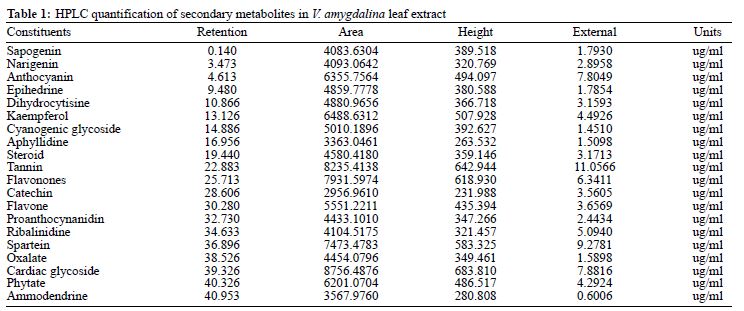
V. amygdalina (VA) and P. biglobosa (PB) have independently demonstrated antihyperglycemic and tissue-protective effects, but evidence regarding their combined activity remains limited. This study evaluated the antidiabetic effects of co-administration of VA leaf and PB seed extracts in diabetic rats. Forty-eight male Wistar rats were allocated into six groups: Groups 1 (a non-diabetic control), 2 (untreated diabetic), 3 (glibenclamide-treated diabetic, 2.5 mg/kg), 4 to 6 (diabetic groups treated with VA (200 mg/kg), PB (200 mg/kg), and their combination (200 mg/kg). Fasting blood glucose (FBG), insulin, lipid profile, liver and kidney function parameters were assayed. Secondary metabolites were also quantified. Results showed the presence of tannins, cardiac glycosides, anthocyanins, flavonones, flavones and oxalates amongst others in both plants. Compared with untreated diabetic rats, VA, PB, and glibenclamide significantly reduced FBG (p < 0.05). VA + PB produced the fastest early glucose reduction (33.6% by Day 9). Serum insulin remained unchanged (p > 0.05) in all the experimental groups. The combined treatment produced the greatest overall improvement in lipid profile, reducing triglycerides by 18.8%, total cholesterol by 21.3%, LDL-cholesterol by 91.9%, and VLDL-cholesterol by 18.8%. It also reduced total bilirubin by 73.9%, direct bilirubin by 44.9%, and serum uric acid by 53.7%, although alkaline phosphatase remained elevated. These findings demonstrated that VA and PB possess significant antihyperglycaemic, hypolipidaemic, hepatoprotective, and renoprotective activities, with combined administration providing the broadest overall metabolic benefits.
Full text article
References
Abdissa, D., & Hirpa, D. (2022). Dyslipidemia and its associated factors among adult diabetes outpatients in West Shewa Zone public hospitals, Ethiopia. BMC Cardiovascular Disorders, 22, Article 39. https://doi.org/10.1186/s12872-022-02489-w
Al-Ishaq, R. K., Abotaleb, M., Kubatka, P., Kajo, K., & Büsselberg, D. (2019). Flavonoids and their anti-diabetic effects: Cellular mechanisms and effects to improve blood sugar levels. Biomolecules, 9(9), 430. https://doi.org/10.3390/biom9090430
Anushree, V.B., Jha, D. K., & Bhattacharjee, S. (2025). Global Trends and Burden of Diabetes: A Comprehensive Review of Global Insights and Emerging Challenges. Current Journal of Applied Science and Technology, 44(7), 134–150. https://doi.org/10.9734/cjast/2025/v44i74580
Ansari, P., Khan, J. T., Chowdhury, S., Reberio, A. D., Kumar, S., Seidel, V., Abdel-Wahab, Y. H. A., & Flatt, P. R. (2024). Plant-based diets and phytochemicals in the management of diabetes mellitus and prevention of its complications: A review. Nutrients, 16(21), 3709. https://doi.org/10.3390/nu16213709
Atanacković-Krstonošić, M., Cvejić-Hogervorst, J., Mikulić, M., & Gojković-Bukarica, L. (2019). Development of HPLC method for determination of phenolic compounds on a core-shell column by direct injection of wine samples. Journal of Chromatographic Science, 57(3), 232–241. https://doi.org/10.1556/1326.2019.00611
Bouyahya, A., Balahbib, A., Khalid, A., Makeen, H. A., Alhazmi, H. A., Albratty, M., Hermansyah, A., Ming, L. C., Goh, K. W., & El Omari, N. (2024). Clinical applications and mechanism insights of natural flavonoids against type 2 diabetes mellitus. Heliyon, 10(9), e28654. https://doi.org/10.1016/j.heliyon.2024.e29718
Cavalcante, M. de A., Oliveira, J. dos S., Barreto, M. S. da S., et al. (2022). An HPLC method to determine phenolic compounds of plant extracts: Application to Byrsonima crassifolia and Senna alata leaf. Pharmacognosy Research, 14(4), 395–404.
https://doi.org/10.5530/pres.14.4.58
Clemente-Suárez, V. J., Martín-Rodríguez, A., Beltrán-Velasco, A. I., Rubio-Zarapuz, A., Martínez-Guardado, I., Valcárcel-Martín, R., & Tornero-Aguilera, J. F. (2025). Functional and therapeutic roles of plant-derived antioxidants in type 2 diabetes mellitus: Mechanisms, challenges, and considerations for special populations. Antioxidants, 14(6), 725. https://doi.org/10.3390/antiox14060725
Degu, S., Asfaw, M., Zelalem, A., Mihretu, J., Asaye, A., & Getachew, T. (2024). V. amygdalina: A comprehensive review of the nutritional makeup, traditional medicinal use, and pharmacology of isolated phytochemicals and compounds. Frontiers in Natural Products, 3. https://doi.org/10.3389/fntpr.2024.1347855
Friedewald, W. T., Levy, R. I., & Fredrickson, D. S. (1972). Estimation of the concentration of low-density lipoprotein cholesterol in plasma, without use of the preparative ultracentrifuge. Clinical Chemistry, 18(6), 499–502. https://doi.org/10.1093/clinchem/18.6.499
Hossain, M. J., Al-Mamun, M., & Islam, M. R. (2024). Diabetes mellitus, the fastest growing global public health concern: Early detection should be focused. Health Science Reports, 7(3), e2004. https://doi.org/10.1002/hsr2.2004
Hu, Y., Chen, X., Hu, M., et al. (2022). Medicinal and edible plants in the treatment of dyslipidemia: Advances and prospects. Chinese Medicine, 17, Article 113. https://doi.org/10.1186/s13020-022-00666-9
Ijeh, I. I., Igwe, K. K., & Ejike, C. E. C. C. (2011). Effect of leaf aqueous extracts of V. amygdalina Del. on contraction of mammary gland and uterus of guinea pig dams. International Journal of Tropical Disease & Health, 1(3), 107–116. http://dx.doi.org/10.9734/ijtdh
Jain, A., Jangid, T., Jangir, R. N., & Bhardwaj, G. S. (2025). Antidiabetic activity of polyherbal formulations: A comprehensive review. Protoplasma, 262(5), 1031–1052. https://doi.org/10.1007/s00709-025-02057-x
Khoddami, A., Wilkes, M. A., & Roberts, T. H. (2013). Techniques for analysis of plant phenolic compounds. Molecules, 18(2), 2328–2375. https://doi.org/10.3390/molecules18022328
Liu, Y., Liu, C., Kou, X., Wang, Y., Yu, Y., Zhen, N., Jiang, J., Zhaxi, P., & Xue, Z. (2022). Synergistic hypolipidemic effects and mechanisms of phytochemicals: A review. Foods, 11(18), 2774. https://doi.org/10.3390/foods11182774
Masiello, P., Broca, C., Gross, R., Roye, M., Manteghetti, M., Hillaire-Buys, D., Novelli, M., & Ribes, G. (1998). Development of a new model of type 2 diabetes in adult rats administered streptozotocin and nicotinamide. Diabetes, 47(2), 224–229. https://doi.org/10.2337/diab.47.2.224
Masters, E. T., & Kelly, B. A. (2024). Protein quality of African locust bean: A high-value gathered tree food contributing protein and palatability to plant-based diets. International Journal of Food Science, 2024, Article 1596212. https://doi.org/10.1155/2024/1596212
Ogunyinka, B. I., Oyinloye, B. E., Osunsanmi, F. O., Kolanisi, U., Opoku, A. R., & Kappo, A. P. (2019). Protein isolate from P. biglobosa seed improves dyslipidaemia and cardiac oxidative stress in streptozotocin-induced diabetic rats. Antioxidants, 8(10), 481. https://doi.org/10.3390/antiox8100481
Pieroni, A. (2005). Prance, Ghillean; Nesbitt, Mark (eds.). The Cultural History of Plants. Routledge. p. 31. ISBN 0-415-92746-3.
Ranasinghe, R., Mathai, M., & Zulli, A. (2023). Cytoprotective remedies for ameliorating nephrotoxicity induced by renal oxidative stress. Life Sciences, 318, Article 121495. https://doi.org/10.1016/j.lfs.2023.121466
Singh, S., Bansal, A., Singh, V., Chopra, T., & Poddar, J. (2022). Flavonoids, alkaloids and terpenoids: A new hope for the treatment of diabetes mellitus. Journal of Diabetes and Metabolic Disorders, 21(1), 941–950. https://doi.org/10.1007/s40200-021-00943-8
Soji-Omoniwa, O., Abdulazeez, U. O., Oloba, C. O., Kolawole, S. O., Olayinka, J. O., Oludipe, E. O., Ajediti, A. F., & Yusuf, H. T. (2025). Fish oil and V. amygdalina leaf-supplemented biscuits increased insulin secretion and suppressed pro-inflammatory cytokines in type 2 diabetic Wistar rats. Al-Bahir: Journal for Engineering and Pure Sciences, 7(2): 94–102. https://doi.org/10.55810/2313-0083.1108
Srinivasan, K., Viswanad, B., Asrat, L., Kaul, C. L., & Ramarao, P. (2005). Combination of high-fat diet-fed and low-dose streptozotocin-treated rat: A model for type 2 diabetes and pharmacological screening. Pharmacological Research, 52(4), 313–320. https://doi.org/10.1016/j.phrs.2005.05.004
Stoeneșcu, A.-M., Trandafir, I., & Cosmulescu, S. (2022). Determination of phenolic compounds using HPLC-UV method in wild fruit species. Horticulturae, 8(2), 84. https://doi.org/10.3390/horticulturae8020084
Strikić, D., Vujević, A., Perica, D., Leskovar, D., Paponja, K., Pećin, I., & Merćep, I. (2023). Importance of dyslipidaemia treatment in individuals with type 2 diabetes mellitus—A narrative review. Diabetology, 4(4), 538–552. https://doi.org/10.3390/diabetology4040048
Szkudelski, T. (2012). Streptozotocin-nicotinamide-induced diabetes in the rat: Characteristics of the experimental model. Experimental Biology and Medicine, 237(5), 481–490. https://doi.org/10.1258/ebm.2011.011372
Wallace TM, Levy JC, Matthews DR. (2004). Use and abuse of HOMA modeling. Diabetes Care. 2004 Jun;27(6):1487-95. 10.2337/diacare.27.6.1487 PMID: 15161807.
Zhao, L., Yuan, J., Yang, Q., Ma, J., Yang, F., Zou, Y., Liu, K & Liu, F. (2026). Diabetes and its complications: molecular mechanisms, prevention and treatment. Signal Transduction and Targeted Therapy, 11(22). https://doi.org/10.1038/s41392-025-02401-w
Zhou, X.-D., Chen, Q.-F., Kim, S. U., Yip, T. C.-F., Petta, S., Nakajima, A., Tsochatzis, E., Boursier, J., Bugianesi, E., Hagström, H., Chan, W.-K., Romero-Gomez, M., Calleja, J. L., de Lédinghen, V., Castéra, L., Sanyal, A. J., Goh, G. B.-B., Newsome, P. N., Fan, J.-G., ... Zheng, M.-H. (2026). Long-term glycemic control and the risk of liver stiffness progression and liver-related events in MASLD. Clinical Gastroenterology and Hepatology, 24(5), 1332–1343. https://doi.org/10.1016/j.cgh.2025.10.003
Authors
Copyright (c) 2026 Omolola Soji-Omoniwa, Olukanni Anthony Olumide, Asipa Rahmatullahi Fowomola, Onoja Abraham Ameh, Oyerinola Marvellous Adenike, Abubakar Abdulgafar Gbolahan, Orojo Olayemi Elizabeth, and Omowarere-Sheriff Aminat

This work is licensed under a Creative Commons Attribution-NonCommercial-ShareAlike 4.0 International License.
Authors who publish with this journal agree to the following terms:
- Authors retain copyright and grant the journal right of first publication with the work simultaneously licensed under a Creative Commons Attribution License [CC BY-NC-SA 4.0] that allows others to share the work with an acknowledgment of the work's authorship and initial publication in this journal.
- Authors are able to enter into separate, additional contractual arrangements for the non-exclusive distribution of the journal's published version of the work, with an acknowledgment of its initial publication in this journal.
- Authors are permitted and encouraged to post their work online.